TLDR
- Die-cut vinyl stickers are the best all-purpose option for client giveaways, shop logos, and individual artwork.
- Holographic stickers work especially well for bold flash designs, metallic effects, and convention merchandise.
- Sticker sheets let artists group several smaller flash designs into one product.
- Clear and transfer stickers are useful for studio windows, mirrors, equipment cases, and minimal branding.
- Roll labels are better than individual stickers when branding a high volume of merchandise or packaging.
Tattoo artists already have something most businesses struggle to create: original art that people genuinely want to display.
That makes stickers a natural fit. A client can leave the shop with a piece of art on their skin and a smaller version for their laptop, toolbox, water bottle, sketchbook, or car window. Stickers can also turn flash designs into affordable merchandise, promote individual artists, brand packaging, and make a convention table feel complete.
The best stickers for tattoo shops and artists depend on how they will be used. A sticker handed to every client needs different qualities than a limited-edition flash sheet or a permanent studio window decal.
Quick Guide to Tattoo Shop Sticker Types
| Use | Best Sticker Type | Why It Works |
|---|---|---|
| Client giveaways | Die-cut vinyl | Durable, easy to distribute, and suitable for detailed artwork |
| Shop logo stickers | Die-cut or transfer stickers | Keeps branding clean and recognizable |
| Flash art merchandise | Holographic or specialty vinyl | Adds visual movement and collectible value |
| Multiple small designs | Sticker sheets | Places several flash pieces on one sheet |
| Windows and mirrors | Clear or transfer stickers | Creates a cleaner look without a solid background |
| Packaging and merch orders | Roll labels | Faster to peel and apply in larger quantities |
| Conventions | Vinyl, holographic, and sticker packs | Easy to transport, display, sell, or give away |
| Equipment cases | Laminated vinyl | Better suited to handling, moisture, and everyday wear |
For most tattoo shops, the best starting point is a mix of die-cut vinyl stickers and one specialty format. The vinyl stickers handle everyday promotion, while the specialty option gives clients something more distinctive to buy or collect.
Die-Cut Vinyl Stickers Are the Best Overall Choice
Die-cut vinyl stickers are the safest all-purpose choice for tattoo artists.
The sticker is cut around the shape of the design rather than being left as a standard square or rectangle. A snake can follow the curve of its body. A dagger can have a long narrow silhouette. A portrait sticker can follow the shape of the hair, shoulders, and surrounding frame.
This shape makes the sticker feel like a small finished piece of artwork instead of an image printed on a label.
Common uses include:
- Studio logo stickers
- Artist signature designs
- Individual flash pieces
- Appointment-booking QR codes
- Client thank-you gifts
- Merchandise order inserts
- Tattoo convention giveaways
- Laptop and equipment-case decals
The custom tattoo artist stickers offered by CustomStickers.com are printed in full color on white vinyl and coated with a weather-resistant laminate. The stickers can be cut to the shape of the artwork, and the selected size is based on the longest side of the design.
White vinyl is particularly useful for tattoo art because it gives the colors a consistent base. Skin tones, reds, yellows, pale blues, and fine black lines generally remain easier to see than they would on a transparent material.
For a first order, I would usually begin with a recognizable studio logo and one or two strong flash designs. That provides a practical branding sticker and something clients may choose based on personal taste.
Holographic Stickers Work Well for Flash Art
Holographic stickers are one of the best specialty options for tattoo shops.
The material reflects a shifting rainbow effect as the viewing angle changes. It can make flames, chrome lettering, stars, eyes, knives, insects, snakes, and fantasy artwork feel more animated.
The holographic material does not need to cover every part of the design. Strategic areas can be left open so the effect appears in highlights, backgrounds, borders, or selected details.
Designs that often work well on holographic vinyl include:
- Traditional daggers and swords
- Chrome or metallic lettering
- Sacred hearts
- Moths and butterflies
- Flames and lightning
- Skulls and skeletons
- Celestial designs
- Cyber-sigilism
- Fantasy creatures
- Japanese-inspired waves and clouds
CustomStickers.com describes its custom holographic stickers as being printed on rainbow vinyl that changes color in the light. The company also laminates its sticker products to protect them from sunlight, scratches, and routine exposure.
Holographic stickers work best when the artwork has clear shapes and enough contrast. Very dark artwork printed across the entire surface can hide much of the holographic effect. Leaving selected areas open usually produces a more noticeable result.
They can be given to clients, but they also make sense as a small retail item. A standard logo sticker may be free, while a larger holographic flash design can be sold at the counter or included with higher-value purchases.
Sticker Sheets Turn Flash Into Merchandise
A tattoo artist may have dozens of strong designs that are too small or too numerous to order as separate stickers. Sticker sheets solve that problem.
Each sheet can contain several kiss-cut stickers on one backing page. The customer peels off the individual designs while the surrounding sheet remains intact.
A sticker sheet could include:
- A themed flash collection
- Several versions of the studio mascot
- Small fillers, stars, flames, dots, and webs
- A matching set of traditional designs
- A seasonal Halloween or Valentine’s collection
- Artist logo, social handle, and flash artwork
- Designs from several artists working in the same studio
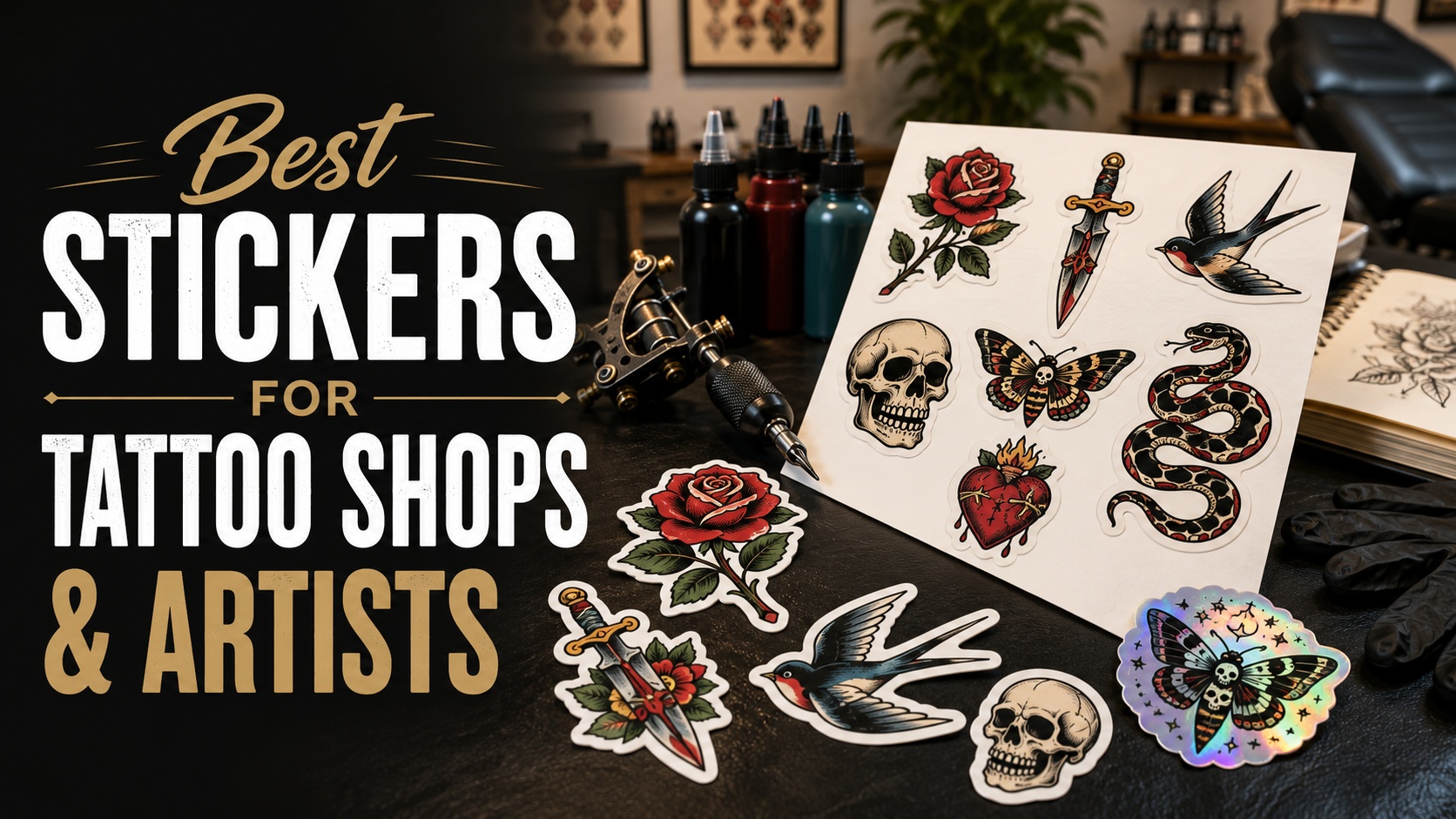
For example, an American traditional sheet might combine a rose, panther, swallow, dagger, heart, and small filler stars. A darker sheet might include a skull, moth, candle, spider, and ornamental lettering.
Custom sticker sheets use kiss-cut stickers arranged on one sheet. They are a practical format when an artist wants to keep multiple small designs together or sell themed collections.
Sticker sheets can also provide more room for branding. The backing sheet can carry the artist’s name, shop information, social media handle, or booking website without placing that information on every individual sticker.
That keeps the actual artwork clean.
Clear Stickers Suit Windows and Minimal Designs
Clear stickers allow the surface underneath the sticker to remain visible.
They work well on:
- Studio windows
- Glass doors
- Mirrors
- Clear merchandise packaging
- Acrylic displays
- Bottles and jars
- Smooth equipment cases
A white logo printed on clear vinyl can look sharp on a dark window or black equipment case. A black design can work well on light glass, pale packaging, or metal surfaces.
CustomStickers.com notes that clear custom stickers are designed to let the artwork stand out without an opaque white background. White ink is also available by request, which can help light artwork remain visible on dark or transparent surfaces.
The surface color matters more with clear stickers. Transparent areas will take on the appearance of whatever is behind them. A design that looks bright on a white screen may become hard to see on tinted glass.
Create a mockup on the intended background before approving the design. And remember that standard printers may represent transparency as white, which can make a digital preview misleading.
Transfer Stickers Give Studio Logos a Painted-On Look
Transfer stickers are useful when the design contains separate letters or shapes but should not have a visible clear or white background.
The logo is held together by transfer tape during installation. Once the design is pressed onto the surface, the tape is removed and only the vinyl elements remain.
This format works well for:
- Shop names on front windows
- Business hours on glass doors
- Artist handles on mirrors
- Studio logos on equipment cases
- Vehicle windows
- Reception desks
- Display cabinets
- Short quotes or lettering
Transfer stickers create a result that can look closer to cut signage than a standard printed sticker. They are especially effective for simple logos, solid lettering, and one-color designs.
Fine lines and tiny text may be difficult to produce or install at small sizes. Use bold lettering and avoid unnecessary distressed textures. A detailed tattoo illustration is usually better as a printed vinyl sticker, while a shop wordmark may be ideal for a transfer decal.
Matte Stickers Complement Traditional Artwork
Matte and gloss finishes change how the same artwork feels.
Matte stickers have a softer, low-reflection surface. This can suit blackwork, engraving-inspired art, fine-line illustrations, muted color palettes, and traditional flash designed to resemble paper or painted sheets.
Matte finishes also make small text easier to read under bright studio lighting because they produce less glare.
Good uses for matte stickers include:
- Black-and-gray artwork
- Fine-line botanical designs
- Vintage flash
- Woodcut and engraving styles
- Artist signatures
- Appointment reminder stickers
- Minimal black-and-white logos
A matte finish does not make the colors dull, but it usually gives them a flatter and more understated appearance.
Gloss Stickers Make Color Feel Brighter
Gloss stickers have a reflective surface that can make color and contrast feel stronger.
They work well for:
- Neo-traditional art
- New school designs
- Anime-inspired tattoos
- Bright flowers
- Color portraits
- Japanese-inspired artwork
- Cartoon designs
- Bold shop logos
Gloss also fits stickers intended for water bottles, toolboxes, hard cases, and other smooth items where a polished vinyl appearance feels natural.
CustomStickers.com offers both matte and gloss finishes on its standard durable vinyl stickers. Its vinyl products use a UV-resistant laminate and can be die cut around the artwork.
The choice between matte and gloss is mostly visual. Pick the finish that fits the artwork rather than assuming one finish is always better.
Roll Labels Are Better for Packaging
Individual die-cut stickers are ideal as merchandise and giveaways. They are not always the most efficient choice for packaging 200 shirts, prints, aftercare bags, or mailers.
Roll labels are designed for faster peeling and application. They can be used to brand:
- Merchandise bags
- Tissue paper
- Shipping boxes
- Print sleeves
- Envelopes
- Product jars and bottles
- Thank-you cards
- Retail packaging
- Convention purchases
A shop may use a simple round logo label to seal tissue paper and include a separate die-cut sticker as the client’s free gift. The label handles the packaging job, while the vinyl sticker remains clean and unused.
CustomStickers.com offers custom labels for packaging in sheet and roll formats. Roll labels are better suited to repeated application, while sheet labels can be more manageable for lower quantities and hand packaging.
Stickers used for studio branding or promotional packaging should remain separate from sterile tools, medical supplies, or surfaces that must follow specific sanitation procedures. Use them on exterior packaging, storage cases, displays, and customer-facing materials instead.
QR Code Stickers Can Support Artist Bookings
A QR code sticker can send clients to:
- An online booking form
- An artist portfolio
- Available flash
- Aftercare information
- Convention dates
- A studio contact page
- A review page
The QR code should not dominate the artwork. One approach is to place it on the backing card or sticker-sheet border rather than incorporating it into the main illustration.
Another option is to create a separate business-card-style sticker containing:
- Artist name
- Studio name
- Specialty
- Social handle
- QR code
- City or neighborhood
Leave enough blank space around the QR code and test it from several phones before ordering. CustomStickers.com recommends a minimum printed QR code size of 0.5 inches, while noting that readability can still vary by phone. A larger code is safer when space allows.
Do not link a QR code to a temporary page that may disappear. A stable website or redirect gives you more control than linking directly to a short-lived campaign.
Best Sticker Sizes for Tattoo Artists
The right size depends on the artwork and intended use.
2-Inch Stickers
Two-inch stickers work well for small logos, filler designs, packaging inserts, and high-volume giveaways. They are easy to carry and inexpensive to include with every appointment.
Tiny text and detailed linework may become difficult to read at this size.
3-Inch Stickers
Three inches is a strong general-purpose size. It gives most tattoo designs enough room to show detail without becoming difficult to distribute.
This size works well for flash art, logo stickers, convention handouts, and merchandise inserts.
4-Inch Stickers
Four-inch stickers suit more detailed pieces, larger logos, vehicle windows, equipment cases, and stickers sold as merchandise.
They cost more per piece but provide enough space for stronger visual impact.
Mixed Sizes
A shop does not need to choose one size for every design.
Use smaller stickers for logos and giveaways. Save larger sizes for detailed artwork, limited editions, or retail sticker packs. Sticker sheets can combine several small designs without forcing each one to become a separate product.
Remember that sticker size is generally measured by the longest side. A three-inch dagger may be three inches tall but only one inch wide. A round three-inch design will take up much more total area.
How to Prepare Tattoo Artwork for Stickers
Tattoo artwork does not always move directly from a sketchbook or tablet to a sticker.
Start With a High-Resolution File
Submit artwork at the intended print size and use a high-resolution image. CustomStickers.com recommends 300 pixels per inch at full size, although vector files such as AI, EPS, SVG, and vector PDF are also useful.
Check Thin Lines
Lines that work in a large digital illustration may disappear when the sticker is reduced. View the artwork at actual size before submitting it.
Increase Contrast Where Needed
Dark gray shading, subtle gradients, and fine textures may lose definition at smaller sizes. Slightly stronger contrast can help the artwork hold together.
Decide Between a Border and Full Bleed
A white border separates the artwork from the surface and gives the sticker a classic die-cut look. Full bleed carries the artwork to the cut edge.
Complex silhouettes often benefit from a border because it protects small details and makes the shape easier to read.
Keep Important Details Away From the Cut
Do not place text, eyes, signatures, or other important details directly against the cut edge. Small cutting variations are normal, so critical artwork needs a safety margin.
Review the Proof at Actual Size
A proof is not only for checking spelling. Look at the cut shape, borders, small gaps, thin lines, and total proportions.
Zooming in can hide size problems. View the proof at approximately the physical size of the finished sticker before approving it.
How Tattoo Shops Can Distribute Stickers
There are several ways to use stickers without making them feel like random promotional material.
Include One With Every Appointment
Give clients a studio logo sticker or let them choose from several artist designs.
Choice increases the chance that the sticker will actually be used.
Sell Limited Flash Stickers
Turn popular flash pieces into numbered or seasonal sticker releases. This gives followers a way to support an artist even when they are not ready to book a tattoo.
Build Sticker Packs
Combine a logo, two flash designs, and one specialty sticker. Packs can be sold online, at the studio, or at conventions.
Trade With Other Artists
Sticker trading is common in many art communities. It can help artists build relationships and create a physical record of guest spots, conventions, and collaborations.
Add Stickers to Merchandise Orders
Include a sticker with shirts, prints, pins, hats, and other products. The sticker adds little shipping bulk and gives the customer another piece of the artist’s work.
Use Them at Conventions
Stickers are easier to transport than many forms of merchandise. Keep a low-cost giveaway near the front of the table and larger specialty designs in the paid merchandise display.
What Are the Best Stickers for Tattoo Shops and Artists?
For most shops, die-cut vinyl stickers are the best overall choice. They can reproduce full-color art, follow custom shapes, and work as giveaways or merchandise.
But a good sticker program usually uses more than one format:
- Die-cut vinyl: Everyday giveaways and artwork
- Holographic vinyl: Premium flash and collectible designs
- Sticker sheets: Themed collections and small flash
- Clear stickers: Windows, mirrors, and minimal branding
- Transfer stickers: Studio lettering and shop logos
- Roll labels: Packaging and merchandise fulfillment
Start with the format that matches the job. Do not use a premium holographic sticker to seal disposable tissue paper, and do not expect a basic packaging label to feel like collectible artist merchandise.
Frequently Asked Questions
Are Tattoo Stickers the Same as Temporary Tattoos?
No. The stickers discussed here are adhesive vinyl products intended for surfaces such as laptops, bottles, windows, packaging, and equipment cases. They are not designed to be applied to skin.
What Sticker Finish Is Best for Tattoo Flash?
Matte works well for traditional flash, blackwork, and vintage-looking artwork. Gloss can make bright colors feel stronger. Holographic vinyl is useful when the reflective material is intentionally incorporated into the design.
What Size Sticker Should a Tattoo Artist Order?
Three inches is a practical starting size for most individual flash designs. Two-inch stickers suit simple logos and giveaways, while four-inch stickers provide more room for detailed art.
Can Tattoo Artists Sell Stickers of Their Flash?
Yes, provided they own the artwork and have the right to reproduce it. Artists should avoid selling stickers that copy copyrighted characters, logos, or another artist’s work without permission.
How Many Sticker Designs Should a Shop Order?
Start with a recognizable studio logo and two or three designs that represent the artists’ styles. Track which designs clients choose or purchase before expanding the collection.
Final Thoughts
The best stickers for tattoo shops and artists should feel like small pieces of art, not disposable advertisements.
Die-cut vinyl is the strongest general option. Holographic materials can make selected flash designs more collectible. Sticker sheets turn groups of small designs into practical merchandise, while clear stickers, transfer decals, and roll labels handle studio branding and packaging.
Keep the artwork readable. Match the finish to the design. And give clients enough choice to find something they would actually put on their belongings.
Tattoo shops and independent artists can order custom stickers for their artwork in multiple materials, sizes, shapes, and finishes. Start with one reliable logo sticker and a few designs that show what makes the artist’s work recognizable.